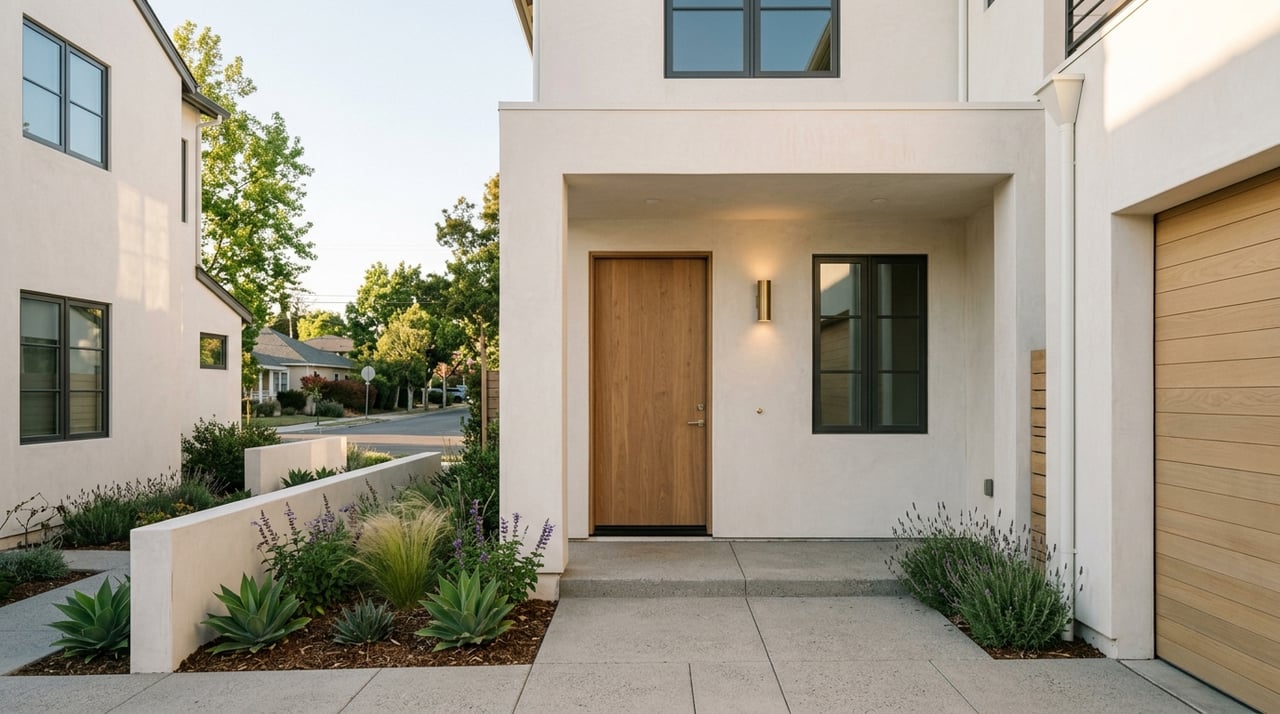
San Jose Home Types: Comparing Condos, Townhomes, and Houses
If you are buying in San Jose, one of the biggest decisions is not just where to live, but what type of home makes the most sense for your budget and lifestyle. In this market, the difference between a condo, townhome, and house can affect your monthly costs, maintenance responsibilities, financing path, and day-to-day experience. The good news is that once you understand the trade-offs, the choice becomes much clearer. Let’s dive in.
In San Jose, property type is one of the biggest affordability levers you have as a buyer. According to the City of San José housing market update, the 2025 median price was about $1.68 million for single-family homes and about $830,000 for condo and townhome properties.
That means the median detached home sold for roughly $850,000 more than the median attached home. Since the city groups condos and townhomes together in that report, the attached-home number works best as a broad benchmark rather than a condo-only price point. Even so, the gap is large enough that your property type choice can shape your search from day one.
A simple way to think about it is this:
That framework will not fit every property, but it is a helpful starting point in San Jose.
For many buyers, a condo is the most accessible path into homeownership. If your top priority is getting into the San Jose market at a lower price point, a condo may open options that a detached house simply does not.
According to Fannie Mae’s condo buying guide, condo ownership usually includes shared walls, common areas, and more HOA oversight. Condo fees often help cover exterior repairs and maintenance of common areas, and they may also include water, sewer, trash, amenities, insurance, or reserve funding.
That setup can be appealing if you want less exterior maintenance on your plate. At the same time, it also means you need to be comfortable with HOA rules, shared decision-making, and monthly dues that can change over time.
A condo may be a strong fit if you:
Monthly HOA dues matter just as much as the list price. The Consumer Financial Protection Bureau says HOA dues are usually paid directly to the HOA, not included in your mortgage payment, and they can range from a few hundred dollars per month to more than $1,000.
For condos especially, financing can also be more involved. Fannie Mae notes that lenders may review a project’s financial stability, physical condition, structural integrity, pending lawsuits, evacuation orders, and required inspections, so project eligibility can affect whether financing is available and how smooth the loan process feels.
Townhomes often appeal to buyers who want a balance between affordability and space. In many San Jose communities, they can offer more of a house-like layout than a condo while still coming in below the price of a detached home.
Still, not all townhomes work the same way. Fannie Mae explains that multistory townhomes can share common walls or even be detached structures, so you should not assume every townhome has the same maintenance setup, insurance structure, or HOA responsibilities.
A townhome may be a good choice if you:
Because townhome projects vary so much, details matter. Before you move forward, it helps to confirm:
This is one area where careful document review can save you from surprises later.
If privacy, yard space, and control over the property are high on your list, a single-family home may feel like the clearest match. Detached homes usually give you more independence because you are not typically sharing walls or relying on a common HOA structure in the same way condos and many townhomes do.
The trade-off is cost and responsibility. Based on San Jose’s official market snapshot, detached homes are far more expensive at the median than attached homes, and owners usually take on more of the repair, landscaping, and exterior maintenance themselves.
A single-family home may make the most sense if you:
Here is a simple side-by-side view:
| Property Type | Typical Price Position | Maintenance Responsibility | HOA Involvement | Privacy and Control |
|---|---|---|---|---|
| Condo | Lowest of the three | Lower personal exterior maintenance | Usually highest | Typically lowest |
| Townhome | Middle ground | Varies by project | Often moderate | Moderate |
| Single-family home | Highest | Usually highest owner responsibility | Often lower or none, depending on property | Typically highest |
This is a broad framework, not a rule for every listing. In San Jose, the exact answer often comes down to the specific community, HOA documents, and financing details.
One common mistake is comparing homes based only on list price. In reality, your monthly and long-term costs can look very different depending on HOA dues, maintenance exposure, insurance needs, and taxes.
For attached homes, HOA dues should be part of your budget from the start. Fannie Mae notes that dues vary widely based on location, condition, age, property value, and amenities, and they can increase over time.
You should also check the broader tax picture. A Santa Clara County Assessor booklet explains that property tax bills can include items such as improvement bonds, Mello-Roos bonds, service fees, and direct assessments. That means two homes with similar prices can still have meaningfully different carrying costs.
If you are considering a condo or townhome, document review is not just a formality. It is a key part of understanding what you are buying.
The California Department of Real Estate says a strong due diligence review should include the CC&Rs, bylaws, current budget, reserve funding, insurance coverage, and any recent or pending special assessments. The DRE also notes that HOA budget accuracy is one of the most important parts of the public report because assessment levels can affect financing qualification.
Just as important, the DRE says CC&Rs run with the land and bind future owners. In plain English, that means the rules stay with the property, not just the current owner.
Before you write an offer, try to get clear answers to these questions:
These questions can help you compare options more confidently, especially when two properties look similar on the surface.
The right answer depends on what you are trying to solve for.
If your goal is getting into the market at the lowest price point, a condo may be the strongest starting place. If you want a middle ground between price and space, a townhome may offer the best balance. If you care most about privacy, yard space, and control, and your budget supports it, a single-family home may be worth the premium.
There is no universally best property type in San Jose. There is only the best fit for your finances, tolerance for maintenance, comfort with HOA governance, and long-term plans.
When you are comparing condos, townhomes, and houses, it helps to evaluate each option through the same lens:
That kind of clear framework can keep you from chasing the wrong property type and help you focus on homes that actually support your goals.
Buying in San Jose comes with real complexity, especially when disclosures, HOA documents, and financing rules start to pile up. A calm, informed process makes it much easier to weigh the trade-offs and move forward with confidence. If you want help comparing condos, townhomes, and houses in San Jose, Yuri Lavrentiev can help you sort through the details, understand the numbers, and choose the option that fits you best.
Stay up to date on the latest real estate trends.
Yuri provides elevated representation, refined marketing strategies, and skilled negotiation designed to protect and maximize your investment. With a tailored approach for each client, every property receives white-glove service and every transaction is executed at the highest level.
Yuri Lavrentiev | CA DRE# 02103193
1133 Minnesota Ave San Jose, CA 95125