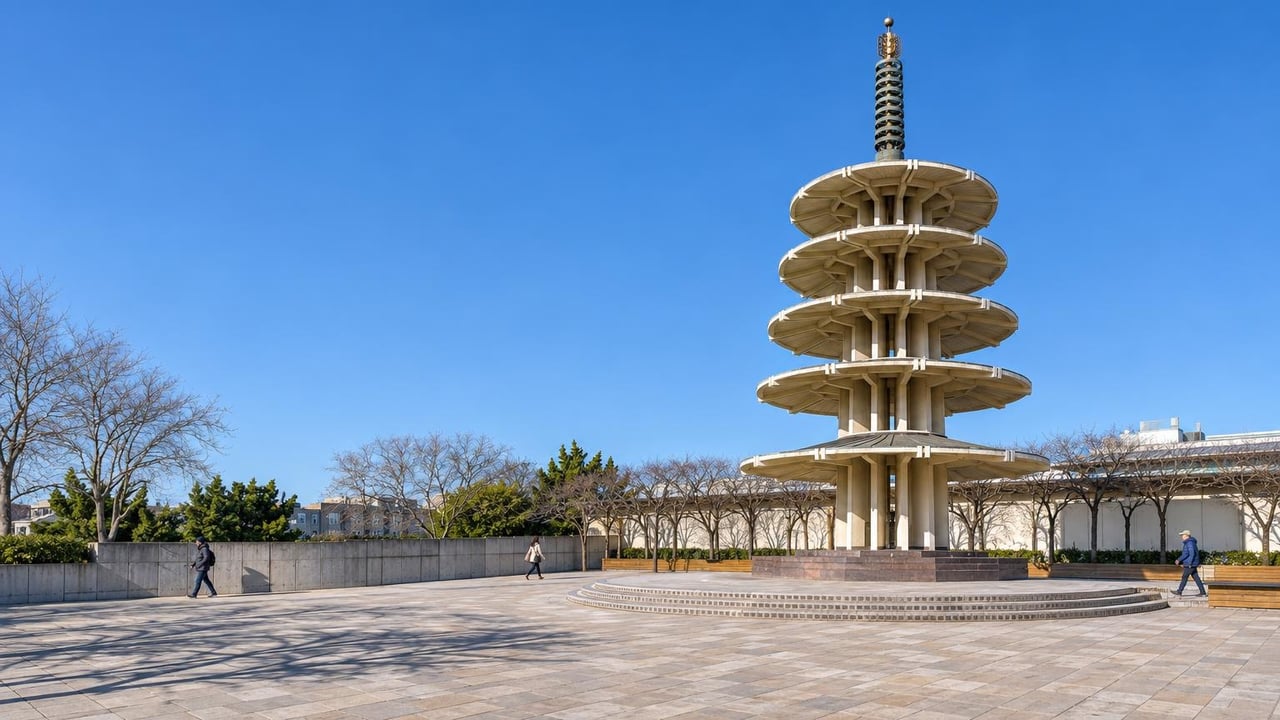
Where to Get New Year's Mochi in San Francisco's Japantown This December
You can't walk into a confectioner in San Francisco's Japantown this December and buy a box of fresh New Year's mochi. Benkyodo closed for good on March 31, 2022. The San Francisco Chronicle reported at the time that the shop shut after 115 years because the Okamura family was retiring. Yamada Seika, another Japantown manju-ya, closed in 1999 after 36 years.
The mochi for this year's ozoni and kagami mochi still gets made in the neighborhood. It now comes from a community center and two congregations, each on its own date with its own rules. Most of it has to be ordered or booked ahead, and the dates all fall in the second half of December.
When Yamada Seika closed, its owner, George Yamada, donated his mochi-making machine to the Japanese Cultural and Community Center of Northern California. The Center says he has also taught the New Year tradition to the community there. The Center's December workshops are built around that machine. Cooked sweet rice goes in hot, and participants learn to shape their own ko-mochi, the small fresh pieces, and finish them with kinako, anko and other sweets.
The Center lists the dishes this mochi is for. Kagami mochi is the stacked New Year decoration that families traditionally break and eat in a ritual called kagami biraki. Zoni is the New Year's Day soup with mochi, taro, carrot, honeywort and red and white kamaboko. Kinako mochi is roasted, dipped in water and rolled in sugar and soy flour on New Year's Day for good luck.
Because the closed shops left no single place to buy, the work is spread out across the month. Here are the 2026 dates in order.
The workshop is the first date on the list. If you're reading this on Thanksgiving, December 19 is a little over three weeks away. Sign-up is through the Center's event page, and you pick a half-hour slot.
Separate from the workshop, the Center sells a limited amount of handmade komochi as a member benefit. It's $8 a box, each box holds about a pound or 12 pieces, and each person can order up to three. Orders must come in ahead of time. The Center asks for no walk-ins, and you can order by phone at (415) 567-5505 or by email at [email protected].
The Center points out two things about this mochi. First, it is plain pounded sweet rice for ozoni, not the soft sweet bean-filled kind. Second, it is fresh and perishable, so if you're picking it up on December 20 for New Year's Day, it goes in the freezer. That 12-day gap between pickup and January 1 is the price of getting komochi made in the neighborhood.
The Soto Mission of San Francisco, Sokoji, holds a mochi-pounding event at the end of every year. The temple writes that it "gets very lively with many participants." On the day, you can try the pounding yourself, buy kenchin-jiru soup, and buy mochi for children, who then shape the round pieces themselves. The temple can't guarantee mochi sales on the day and asks people to order ahead.
Sokoji's 2026 order form has more choices than the Center's and is open to non-members. Prices from the form:
The kasane sets are the closest thing on the December calendar to a ready-made kagami mochi for the household altar, and the form asks that they be pre-ordered. The temple notes the tradition of decorating the family altar or household shrine with kagami mochi and eating mochi at New Year. You can order through the online pre-order page or by emailing the downloadable form to [email protected] by December 25.
Sokoji is the main option for anyone who isn't a Center member and wants anko mochi or an offering set. Because its pickup falls after Christmas, the mochi spends fewer days in the freezer before New Year's Day.
Konko Church of San Francisco's 2026 calendar has its Mochitsuki Sweet Rice Pounding Event on Saturday, December 26, from 8 a.m. to 1 p.m. The church's Yearend Purification and Appreciation Ceremony follows at 10 a.m. the next morning. Konko's pounding is a morning event, and in 2026 it lands the day after Christmas. With Sokoji's event also after Christmas, two of Japantown's community mochitsuki fall in the last week of the year.
Outside December, mochi is sold by the piece at Kissako Tea, 1581 Webster St. #195, in the Japan Center. Its listing in the Japantown business directory says the shop began more than 10 years ago with traditional Japanese tea and mochi. It now has dango, mochi from Japan, and Shueido mochi from San Jose sold by the piece. The same listing mentions Ippodo tea, taiyaki and shaved ice, and says the family running it now grew up in Japantown.
So mochi made at Shueido in San Jose's Japantown is sold in San Francisco's Japantown. We wrote about how San Jose's Japantown refills its storefronts when a longtime business closes, and San Francisco's December calendar shows a similar pattern after Benkyodo.
Mochill, at 1737 Post St. #395, is a different kind of shop. It makes Japanese-style mochi doughnuts with rice flour in flavors such as matcha and kinako.
A household that wants fresh komochi for ozoni, an offering set for the altar and an afternoon at a pounding event can't get all three from one place. A Center member could book a workshop slot on December 19, pick up komochi on the 20th and freeze it, then order a kasane set from Sokoji before the 25th and collect it at the year-end pickup. A non-member would go to Sokoji for both the komochi and the kasane mochi, and could spend the morning of December 26 at Konko Church. Kissako Tea's counter covers the months after that.
For many years, getting New Year's mochi in Japantown meant buying it at a shop like Benkyodo. In December 2026 it's spread across a community center, a temple and a church, and the order deadlines run out before New Year's Day.
If you're thinking about a home in San Francisco or the South Bay and want local detail like this December calendar along with the pricing and the paperwork, reach out to Yuri Lavrentiev. Let's Connect.
Stay up to date on the latest real estate trends.

Yuri provides elevated representation, refined marketing strategies, and skilled negotiation designed to protect and maximize your investment. With a tailored approach for each client, every property receives white-glove service and every transaction is executed at the highest level.
Yuri Lavrentiev | CA DRE# 02103193
1133 Minnesota Ave San Jose, CA 95125