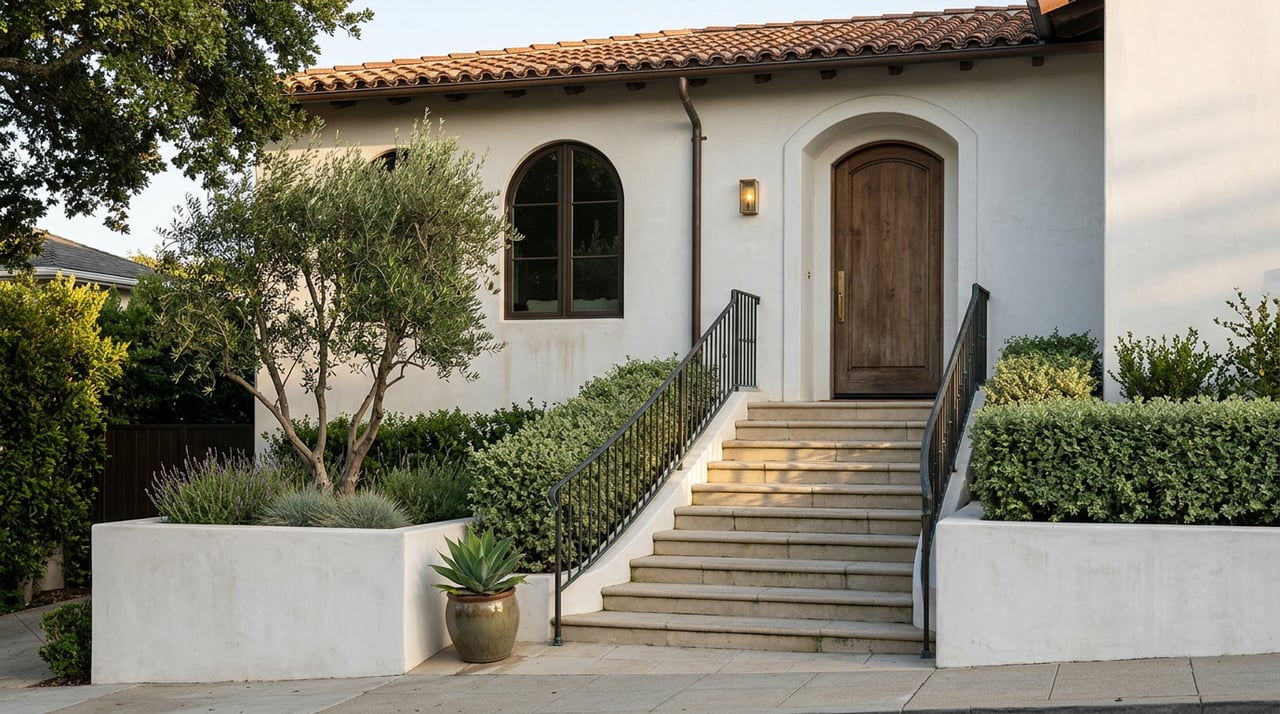
Glen Park's Newest Restaurant Got a Michelin Nod and Still Won't Take Your Reservation
There is no host stand at 679 Chenery Street, no OpenTable countdown, no email confirming a table three weeks from now. You show up, you put your name on a list, and if you happen to walk in at 6:01 on a Wednesday, you might already be behind someone who got there first. The restaurant is La Cigale, it made it into the Michelin Guide within its first year, and it still runs on a same-day waitlist that opens the moment the doors do.
That is an odd choice for a kitchen with this kind of attention. Most restaurants that get written up the way La Cigale has been spend the next year fielding reservation requests from across the Bay. This one built its entire system so that the person most likely to get a seat is whoever lives close enough to walk over on short notice. Once you notice that, it is hard not to notice the same pattern a few blocks away, on a Saturday night calendar that Glen Park has been quietly filling in all year.
Before La Cigale, the storefront at 679 Chenery housed Modern Past, and after that closed the space sat as an empty shell for a long stretch while chef Joseph Magidow and his wife, Daisy Linden, worked out what would replace it. Converting a retail space into a restaurant built around an open wood hearth is not a quick permit. Magidow has described the ventilation alone as running well into six figures, and the buildout, done with Seth Boor architects and Mizen Construction, took more than three years from lease to opening night.
That is a long time to sit on a corner and decide what kind of restaurant you want to be. Magidow and Linden landed on something specific. Back when the space was still under construction, Magidow was already drawing the line, saying, "We don't see La Cigale as just a 'destination restaurant.' First and foremost, we envision a neighborhood restaurant." When the doors actually opened, Linden said much the same thing in fewer words: "We really hope to prioritize the neighborhood." Magidow has also pointed to Glen Park's zoning as part of why this was possible at all, noting that a commercial and transit district designation makes opening a small business here about as easy as it gets in San Francisco. The years of construction were not a sign the neighborhood was hard to build in. They were the cost of building something specific and one-of-a-kind: an eight-foot wood-burning hearth, custom fit to a storefront that was never designed to hold one.
Once La Cigale opened, the choices kept pointing the same direction. There are 15 seats, arranged around the hearth so every plate is cooked and served by Magidow himself, wood-fired using almond and pistachio, with no gas equipment anywhere in the kitchen. The menu is a flat $140 for a three-course tasting that ends up closer to eleven dishes once you count the extras, and the price is genuinely flat: no added tax line, no gratuity line, nothing tacked on at the end. It is open Wednesday through Saturday evenings, and it does not take reservations. Instead it runs on what the restaurant calls à la minute booking, where the waitlist opens at 6 p.m. the day you want to eat.
Magidow has been direct about why he built it this way.
"What's the point of having a cool restaurant in your neighborhood, if it's always booked up?"
That is not a small design decision for a restaurant that has already picked up national attention. It is a filter. Someone planning a special trip in from across the city has to gamble on a same-day waitlist with no guarantee. Someone who lives within a ten-minute walk of Chenery Street can check back that evening and actually get in. The restaurant with a Michelin listing chose to make itself easiest to use for the people who already live there.
Walk two blocks over to Kern Street and you will find the same logic in a completely different format. The Glen Park Night Market launched this year, its first Saturday running June 20, with a run of third-Saturday evenings through the summer that wraps up this coming Saturday, September 19. It sets up on Kern Street between Diamond and Brompton and spills into the adjoining parking lot, with local artists, live music, and food from neighborhood vendors, all free to attend. It is put on jointly by the Glen Park Association, the Glen Park Merchants Association, and Art Walk SF, and funded in part through the city's Civic Joy Fund.
There is no headline act, no ticket tier, no reason for someone from another part of the city to make a special trip. It occupies one block for five hours, four times a summer, and then it is done for the year. That is not an accident of scale. It is a market built to be walkable from home, run by the same merchants association that represents the shops already on Chenery, for an audience that was already going to be in the neighborhood that Saturday anyway.
The timing lines up in one more way that is easy to miss. The Friends of Glen Canyon run habitat restoration mornings in Glen Canyon Park every third Saturday, from 9:30 to noon, the same day the Night Market runs that evening. One group is out pulling invasive plants along the canyon trails in the morning. A few hours later, some of those same people are back on Kern Street for the market. It is the same Saturday, bookended by two different versions of the same idea: show up, do something local, go home.
That pattern extends to the businesses that were already there before either of this year's additions existed. None of them are built to be regional draws either.
None of these needed a grand opening or a write-up to matter. They have just been doing the same job for years, which makes it easier to see what La Cigale and the Night Market are actually doing when they slot in beside them.
Once the Night Market wraps for the season on September 19, the neighborhood's calendar does not go quiet, it just moves indoors. The Glen Park branch library has a Navy Band Woodwind Quintet booked for Friday, October 9 at 4 p.m., part of a steady rotation of small, free, walkable programming that fills the gap between outdoor market season and whatever comes next. It is a smaller draw than a summer night market, on purpose, the same way La Cigale's waitlist is smaller than a national reservation platform, on purpose.
None of this is designed to convince anyone to move to Glen Park. It is designed to make the people who already live there glad they do, one Saturday at a time. That distinction matters if you are trying to understand a neighborhood rather than just visit it. A place that keeps building things engineered for the people already circulating through it, rather than for people trying to find it for the first time, tends to hold onto its character a lot longer than one chasing outside attention.
If you already call Glen Park home, none of this is a surprise so much as a pattern worth naming. And if you are the kind of person who reads a post like this because you are thinking further ahead, whether that means understanding a neighborhood before you buy into it or figuring out what makes one part of San Francisco different from the next, that is a conversation Yuri Lavrentiev has often, in plain terms, without the pressure. Let's Connect.
Stay up to date on the latest real estate trends.

Yuri provides elevated representation, refined marketing strategies, and skilled negotiation designed to protect and maximize your investment. With a tailored approach for each client, every property receives white-glove service and every transaction is executed at the highest level.
Yuri Lavrentiev | CA DRE# 02103193
1133 Minnesota Ave San Jose, CA 95125